Production of art has always been an activity that has involved patience, skills, and expertise with regard to the use of visual composition. Although digital technology has simplified the process through the years, people have had to invest much time in coming up with ideas and designing them.
However, artificial intelligence introduces an entirely different perspective in the creation of images. The artist or the designer is no longer required to draw all the elements of the image since the AI will assist in the generation of an image from the verbal description of the designer’s idea.
What Is AI-Generated Art?
AI art means any visual material that was made using artificial intelligence technology. Contemporary programs usually look through some text description or an existing image and then generate something new based on the provided data.
This prompt may say, for instance, that there is an idyllic forest scene at sunrise, a modern city at night, a portrait, or a creature living somewhere else. The more details one gives, the easier it is for the system to understand the idea behind.
One can apply AI art generator to this process of creating visuals out of text descriptions and images.
Of course, the final result will greatly depend on what the initial prompt, style, composition, lighting, and other parameters were.
Why AI Art Has Become More Accessible
One of the major transformations provided by AI is the decrease in technical barriers. In conventional digital illustration, one needs to be knowledgeable in the software used. A person who has never used professional illustration software will have a hard time coming up with an illustrated concept.
With AI, there is another means for creating illustrations. One can express his thoughts using natural language and not necessarily having to create each and every detail visually.
It doesn’t mean that artistic ability is no longer necessary. Composition, color theory, light and shadows, storytelling, and so on will enable one to achieve good results. But with AI technology, more people will be able to try these aspects of art without necessarily learning how to do everything.
The Importance of Detailed Prompts
A good prompt can actually make a huge difference for the final output. A simple prompt, for example, “a city”, does not really tell much about what the desired picture looks like.
A more particular prompt can say something like a modern city skyline at a rainy evening from the street perspective, with reflections on the street and warm lights shining from nearby buildings.
Good prompts may contain several pieces of information:
- Main subject – what the viewer is supposed to see;
- Environment – description of the place;
- Visual – realistic, illustrative, cinematic, minimalist, artistic, etc.;
- Lighting – daylight, studio, sunset, shadows, etc.;
- Mood – calm, dramatic, mysterious, cheerful, energetic, etc.;
- Composition – position of the main objects.
One does not have to write a lot in order to create a good prompt. The key is to give useful information visually.
Exploring Different Artistic Styles
The use of artificial intelligence to create art gives artists a chance to try out different visual styles that may require much effort to achieve manually.
These styles could be photographic realism, painting, comic illustrations, fantastic scenarios, abstract art, 3D visualization, or minimalist designs.
This process is particularly useful during the concept development phase because the artists will not immediately decide on which one to use but test out several of them.
For professional projects, experimentation can also help teams discuss visual direction. A rough AI-generated concept may give designers and marketers a clearer understanding of what a finished project should look like.
AI Art for Content Creators
Content producers require images for use on blogs, videos, newsletters, presentations, and social media postings on a regular basis. It may prove challenging at times to find appropriate stock imagery because the topic demands an image of a particular scenario.
Here AI-produced visuals can play a role as these provide customized concepts.
For instance, a technology writer talking about future offices may produce an imaginary visual about an automated office. A travel writer may create a stylized landscape to complement the destination guide. A video maker may try out various concepts for thumbnails.
However, it should remain relevant to the content because an attractive picture becomes useless if it doesn’t convey anything about the topic.
Supporting Marketing and Branding Projects
Marketing teams often create multiple visual concepts before deciding on a campaign direction. AI can help with this early-stage exploration.
A company may experiment with various backgrounds, compositions, product placements, or seasons before creating their final advertising pieces.
Nevertheless, AI-created images must be reviewed thoroughly if the image depicts an actual product or service. Such factors as product packaging, size, logo, color scheme, and features must be portrayed realistically.
AI can therefore be particularly useful for developing concepts, while human designers can ensure that the final material meets brand and accuracy requirements.
Editing Is Still Part of the Creative Process
Creating an image is generally not the final thing. Even though the output is fascinating, some modifications might be necessary before the final product becomes good enough to be published.
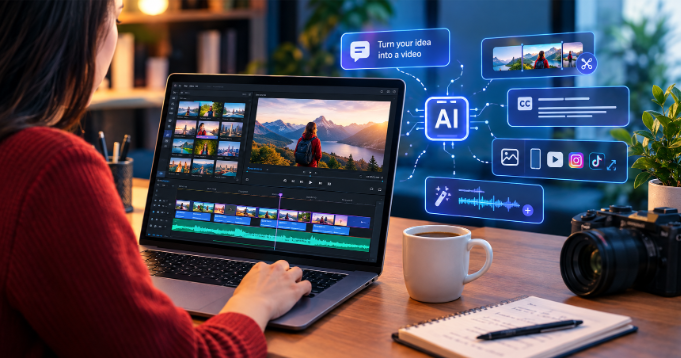
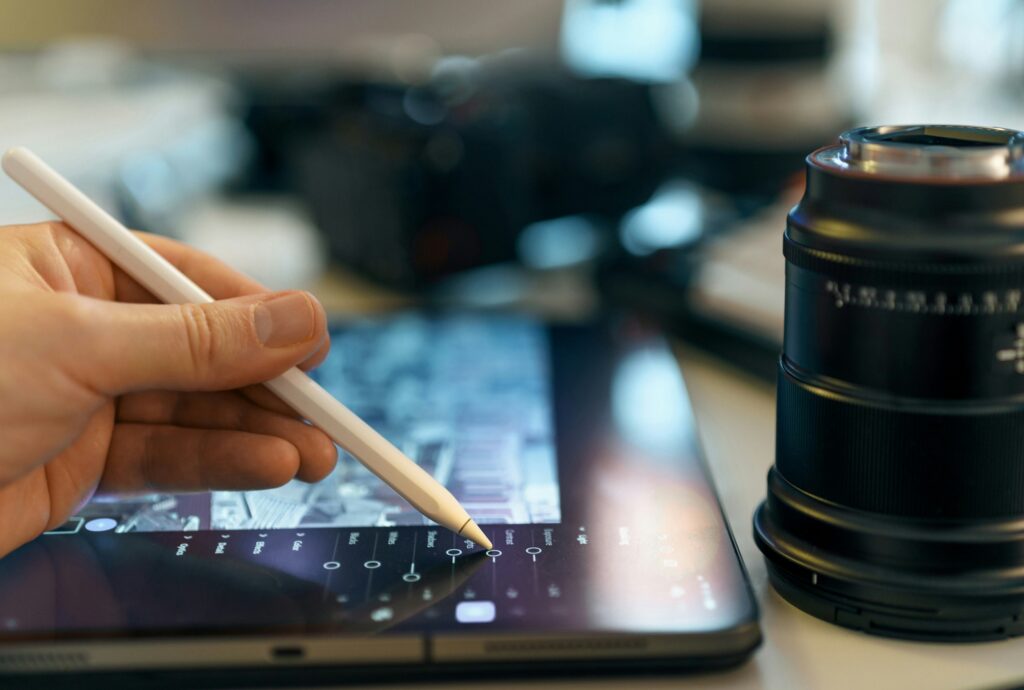
People might wish to edit the cropping, contrast, color, distraction, and some other aspects. In recent days, the process of AI image creation has been merged with that of editing in most AI image workflows. For instance, CapCut’s current AI image workflow has features for editing such as brightness, contrast, saturation, cropping, filtering, and upscaling.
Such integration makes the AI system a useful creative assistant than just an image generator.
Human Judgment Remains Important
The generated visuals may be amazing, yet the machine does not understand all contexts where the visuals are supposed to be used.
In some cases, the visuals may consist of disproportionate elements, incongruous objects, wrong text, and other elements that were not meant by the creator. It is therefore crucial to check all the results.
Human assessment will also determine if the visuals have the right message. The creator must take into account the intended audience, the purpose, cultural aspects, and the quality of the visuals before publication.
When it comes to commercial purposes, the creators have to examine the relevant terms of the AI system and reference materials used.
AI Art and Storytelling
The idea of visual storytelling is another place where generative art can play an important role. Writers and creative teams can generate imagery using AI-generated artwork in order to conceptualize the characters, world, setting, or even scenes before producing a major piece.
A writer could produce visuals in order to help conceptualize the visual representation of a fantasy story’s castle. Similarly, a video producer may work with AI-generated imagery in order to conceptualize possible scenes before production.
This imagery does not have to represent the end product; rather, it can be used as visual references to help communication within a creative team.
Choosing the Right Image for Its Purpose
It is best to think about the context where an image will be used before creating it.
A post on social media would have to have a square or vertical layout, but a website banner might call for a wide landscape layout. Even presentations can have a distinct layout altogether.
Knowing the context of use beforehand could help minimize cropping work and create a more effective image.
It is also advisable for creators to think about having empty spaces for headlines, captions, logos, or any other design element.
The Future of AI-Assisted Creativity
The creation of art using AI is gradually becoming part of an entire process of creation of artwork. This means that the image generated by the system can be further used as the foundation for editing, animation, video creation, presentation, and digital marketing campaigns.
In other words, the process does not entail the generation of just one static image. The creator of the artwork can start off with an initial concept, generate a number of images, choose one, and then use it in the creation of the entire work of art.
Conclusion
AI-generated art is revolutionizing the process of working on digital art. The tool enables the creation of new artworks based on concepts and images written by users in a way that makes experimenting easier.
However, this innovation is the most helpful in combination with the creativity of humans. Good ideas, prompt editing and reviewing are still critical for creating meaningful visual works.
Instead of substituting human artistry, the technology offers artists, businesses, marketers and other creative professionals an opportunity to do some experiments and try something new faster and with the help of visuals.
 Connie Cardillonero has opinions about investment trends in commerce. Informed ones, backed by real experience — but opinions nonetheless, and they doesn't try to disguise them as neutral observation. They thinks a lot of what gets written about Investment Trends in Commerce, Strategies for Profitability, E-Commerce Finance Insights is either too cautious to be useful or too confident to be credible, and they's work tends to sit deliberately in the space between those two failure modes.
Reading Connie's pieces, you get the sense of someone who has thought about this stuff seriously and arrived at actual conclusions — not just collected a range of perspectives and declined to pick one. That can be uncomfortable when they lands on something you disagree with. It's also why the writing is worth engaging with. Connie isn't interested in telling people what they want to hear. They is interested in telling them what they actually thinks, with enough reasoning behind it that you can push back if you want to. That kind of intellectual honesty is rarer than it should be.
What Connie is best at is the moment when a familiar topic reveals something unexpected — when the conventional wisdom turns out to be slightly off, or when a small shift in framing changes everything. They finds those moments consistently, which is why they's work tends to generate real discussion rather than just passive agreement.
Connie Cardillonero has opinions about investment trends in commerce. Informed ones, backed by real experience — but opinions nonetheless, and they doesn't try to disguise them as neutral observation. They thinks a lot of what gets written about Investment Trends in Commerce, Strategies for Profitability, E-Commerce Finance Insights is either too cautious to be useful or too confident to be credible, and they's work tends to sit deliberately in the space between those two failure modes.
Reading Connie's pieces, you get the sense of someone who has thought about this stuff seriously and arrived at actual conclusions — not just collected a range of perspectives and declined to pick one. That can be uncomfortable when they lands on something you disagree with. It's also why the writing is worth engaging with. Connie isn't interested in telling people what they want to hear. They is interested in telling them what they actually thinks, with enough reasoning behind it that you can push back if you want to. That kind of intellectual honesty is rarer than it should be.
What Connie is best at is the moment when a familiar topic reveals something unexpected — when the conventional wisdom turns out to be slightly off, or when a small shift in framing changes everything. They finds those moments consistently, which is why they's work tends to generate real discussion rather than just passive agreement.