
I remember staring at my screen years ago, paralyzed by the idea of investing my first dollar.
You’re probably feeling that same mix of excitement and fear right now. Everyone tells you to start investing, but nobody explains how to actually begin without screwing it up.
Here’s the truth: investing isn’t as complicated as the finance world makes it seem. But it does require you to understand a few core concepts before you put your money anywhere.
I’m going to walk you through the best investment tips for beginners discommercified. No jargon dumps. No get-rich-quick schemes. Just the foundational steps you need to take before you invest your first dollar.
This guide focuses on what actually works. I’ve stripped out the noise and kept only the principles that stand the test of time.
You’ll learn what you need to do before you invest, the core concepts that matter, and a simple strategy to get started. I’ll also show you the mistakes that trip up most beginners so you can avoid them.
By the end, you’ll have a clear roadmap. Not confusion. Not overwhelm. Just a straightforward path to start building wealth.
Step 1: Build Your Financial Foundation (Before You Invest)
You want to start investing.
I hear you. But if you skip this step, you’re setting yourself up for a mess later.
Before you put a single dollar into the market, you need three things locked down. Not suggestions. Requirements.
The Non-Negotiable Emergency Fund
Here’s what nobody tells you about investing. The market doesn’t care about your timing.
A Bankrate study from 2023 found that 57% of Americans couldn’t cover a $1,000 emergency from savings. That means when the car breaks down or the water heater dies, they’re forced to sell investments at whatever price the market offers that day.
Maybe it’s down 15%. Maybe it’s down 30%. Doesn’t matter. You need the cash.
That’s why you need 3 to 6 months of living expenses sitting in a boring savings account. Not invested. Just there.
Is it exciting? No. But it keeps you from making desperate decisions when life happens (and it will).
Conquer High-Interest Debt
Some people say you can invest while carrying debt. They’ll tell you the market returns 10% on average, so why pay off a credit card when you could be building wealth?
Here’s the math they’re missing.
Paying off a credit card with 20% interest gives you a guaranteed 20% return. Tax-free. Risk-free. The market might give you 10% this year. Or it might drop 15%.
According to the Federal Reserve, the average credit card interest rate hit 20.72% in 2023. That’s real money walking out the door every month.
Think of it this way. Would you borrow money at 20% to invest in stocks? Of course not. So why keep that debt while trying to invest?
Define Your ‘Why’
I’ve seen too many people jump into investing without knowing what they’re actually trying to accomplish.
Are you saving for retirement in 30 years? That’s a completely different strategy than saving for a house down payment in 5 years.
Your timeline changes everything. It determines how much risk you can take and what investments make sense for you.
A Vanguard study showed that investors with clear written goals were 42% more likely to stick with their plan during market downturns. That matters because staying the course is half the battle.
Write it down. Make it specific. “I want to retire at 60 with $2 million” beats “I want to be rich someday.”
These best investment tips for beginners Discommercified might sound basic. But I’ve watched people skip this foundation and regret it when things get rocky. While some may dismiss the best investment tips for beginners as discommercified and overly simplistic, those who overlook them often find themselves wishing they had built a stronger foundation when faced with unexpected challenges.Discommercified
Get these three pieces right first. Then we can talk about where to put your money.
Step 2: Understand the Core Building Blocks of Investing
You can’t build a house without knowing what a hammer does.
Same goes for investing.
Before you put a single dollar into the market, you need to understand what you’re actually buying. I spent my first year making trades without really knowing the difference between stocks and bonds (not my proudest moment).
Let me break down the basics.
Stocks vs. Bonds: The Two Main Players
When you buy a stock, you own a piece of a company. If the company does well, your shares go up. If it tanks, so does your money. Higher potential returns, but you’re taking on more risk.
Bonds work differently. You’re basically loaning money to a company or government. They pay you interest over time and give your money back later. The returns are smaller, but you’re not riding the same rollercoaster.
Think of it this way. Stocks are like betting on a startup. Bonds are like being the bank.
Mutual Funds and ETFs: Your Shortcut to Diversification For the full picture, I lay it all out in Discommercified Economic Guide From Disquantified.
Here’s where it gets interesting.
Instead of picking individual stocks or bonds, you can buy a basket that holds hundreds of them. That’s what mutual funds and ETFs do. One purchase gets you a slice of dozens or even thousands of different investments.
Back in 2008, people who owned just a few stocks got crushed. The ones who owned diversified funds? They recovered much faster.
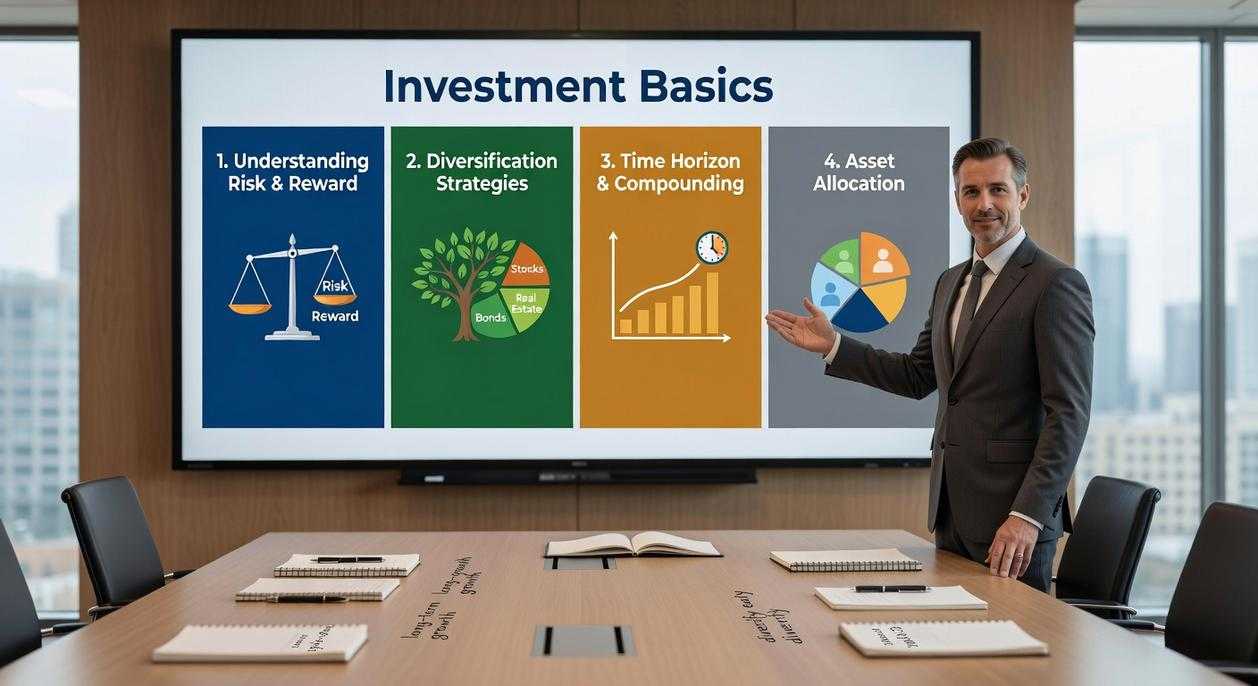
Diversification is the closest thing to a free lunch in investing. It spreads your risk around so one bad apple doesn’t spoil your whole portfolio.
Figure Out Your Risk Tolerance
Some people can watch their account drop 20% and sleep fine. Others panic and sell everything.
Neither is wrong. You just need to know which one you are.
Your age matters here. If you’re 25, you have decades to recover from a market crash. If you’re 55, you might not. Your financial goals play a role too. Saving for a house in two years? You can’t afford much risk. Investing for retirement in 30 years? You can handle more ups and downs.
The best investment tips for beginners discommercified always start with honest self-assessment.
Compounding: How Money Makes Money
Let’s say you invest $1,000 and earn 8% in year one. You now have $1,080.
Year two, you earn 8% again. But this time, you’re earning it on $1,080, not just your original $1,000. You end up with $1,166.
After ten years of this? You’ve got $2,159. You only put in $1,000.
That extra $1,159 came from your earnings making their own earnings. Einstein supposedly called this the eighth wonder of the world (though no one can actually prove he said it).
The longer you let compounding work, the more powerful it gets. Someone who starts investing at 25 will have way more at 65 than someone who starts at 35, even if they invest the same amount each month.
Time is your biggest advantage when you’re starting out.
Step 3: A Simple, Actionable Strategy for Beginners
You’ve got your goals set and your emergency fund ready.
Now comes the part that trips up most people. Actually investing the money.
Here’s what I want you to do.
Start with low-cost index funds or ETFs. These track a broad market index like the S&P 500. You’re not picking individual stocks or trying to beat the market. You’re buying a slice of hundreds of companies at once. In the evolving landscape of personal finance, the “Money Guide Discommercified” emphasizes the importance of starting with low-cost index funds or ETFs, allowing investors to gain exposure to a diverse array of companies without the complexities of individual stock selection.
The fees are tiny (we’re talking 0.03% to 0.20% annually). That matters more than you think. Over 30 years, high fees can eat up hundreds of thousands of dollars in returns.
What you get is instant diversification without the stress of researching individual companies. If you’re just starting out, this is your best move.
Now let me tell you about dollar-cost averaging.
It’s simpler than it sounds. You invest a fixed amount at regular intervals. Maybe $200 every two weeks or $500 every month. You do this whether the market is up or down.
When prices are high, your money buys fewer shares. When prices drop, you buy more. Over time, this smooths out your average cost and removes the temptation to time the market (which nobody can do consistently anyway).
The real benefit? You stop second-guessing yourself. No more staring at charts wondering if today’s the right day to invest.
Put it on autopilot. Set up automatic transfers from your checking account to your brokerage. Pick a schedule that matches your paycheck and forget about it.
This is one of the best investment tips for beginners discommercified because it builds the habit without relying on willpower. You’re not manually moving money around or talking yourself into it each month.
So where do you actually open an account?
You’ve got two main options. Online brokers like Fidelity or Schwab give you control and charge zero commissions on most trades. Robo-advisors like Betterment or Wealthfront build and manage portfolios for you with minimal effort.
Look for platforms with no account minimums, easy-to-use interfaces, and solid educational content. Check out this money guide discommercified for more details on getting started.
The platform matters less than actually starting. Pick one and move forward.
Step 4: Avoid These Common Beginner Mistakes
I still remember my first big loss.
It was 2018 and I was convinced the market was about to crash. Every headline screamed doom. So I sold everything and waited for the bottom.
The market kept climbing for another year.
Trying to ‘Time the Market’
Here’s what nobody tells you when you start investing. Even the pros can’t consistently predict market tops and bottoms. They just can’t.
I learned this the hard way (and it cost me about $4,000 in missed gains).
The real secret? Time in the market beats timing the market. Every single time.
Letting Emotions Take Over
You know what’s worse than losing money? Losing it because you panicked.
I’ve watched friends sell during downturns out of pure fear. Then I’ve seen those same people buy into speculative bubbles because everyone else was doing it.
FOMO is real. Panic is real. But neither one belongs in your investment strategy.
Ignoring Fees
This one sneaks up on you.
A 1% fee doesn’t sound like much. But over 30 years? That “small” fee can eat up nearly 30% of your returns because of compounding.
(I wish someone had shown me the math on this earlier.)
These are the best investment tips for beginners Discommercified that I can give you. Not because they’re complicated. Because they’re the ones that actually matter when you’re starting out. In this comprehensive guide, we’ll explore How to Invest Tips Discommercified, focusing on the essential strategies that every beginner should embrace to build a solid foundation in the world of investing.
Your Journey to Financial Growth Starts Now
You came here wondering how to stop just saving and start actually investing.
Now you have the answer.
You understand the core concepts. You know what a solid foundation looks like. And you’ve seen how a consistent strategy beats trying to time the market every single time.
The fear you felt before? That’s normal. But it shouldn’t stop you anymore.
best investment tips for beginners discommercified all point to the same truth: start with what you know, stick to your plan, and give it time to work.
Building wealth isn’t about getting rich quick. It’s about making smart decisions and letting compound growth do its thing.
Here’s what you need to do next.
Keep learning. This guide gave you the basics but there’s always more to discover. Read about different investment vehicles. Study how successful investors think (not just what they buy).
And here’s the important part: get personalized advice. Your financial situation is unique. A qualified and certified financial professional can help you build a strategy that fits your goals, your timeline, and your risk tolerance.
You’re not just a saver anymore. You’re ready to become an investor.
The only question left is when you’ll take that first step.
 Elviana Xelthorne is the kind of writer who genuinely cannot publish something without checking it twice. Maybe three times. They came to financial management tips for businesses through years of hands-on work rather than theory, which means the things they writes about — Financial Management Tips for Businesses, Market Analysis and Research, Strategies for Profitability, among other areas — are things they has actually tested, questioned, and revised opinions on more than once.
That shows in the work. Elviana's pieces tend to go a level deeper than most. Not in a way that becomes unreadable, but in a way that makes you realize you'd been missing something important. They has a habit of finding the detail that everybody else glosses over and making it the center of the story — which sounds simple, but takes a rare combination of curiosity and patience to pull off consistently. The writing never feels rushed. It feels like someone who sat with the subject long enough to actually understand it.
Outside of specific topics, what Elviana cares about most is whether the reader walks away with something useful. Not impressed. Not entertained. Useful. That's a harder bar to clear than it sounds, and they clears it more often than not — which is why readers tend to remember Elviana's articles long after they've forgotten the headline.
Elviana Xelthorne is the kind of writer who genuinely cannot publish something without checking it twice. Maybe three times. They came to financial management tips for businesses through years of hands-on work rather than theory, which means the things they writes about — Financial Management Tips for Businesses, Market Analysis and Research, Strategies for Profitability, among other areas — are things they has actually tested, questioned, and revised opinions on more than once.
That shows in the work. Elviana's pieces tend to go a level deeper than most. Not in a way that becomes unreadable, but in a way that makes you realize you'd been missing something important. They has a habit of finding the detail that everybody else glosses over and making it the center of the story — which sounds simple, but takes a rare combination of curiosity and patience to pull off consistently. The writing never feels rushed. It feels like someone who sat with the subject long enough to actually understand it.
Outside of specific topics, what Elviana cares about most is whether the reader walks away with something useful. Not impressed. Not entertained. Useful. That's a harder bar to clear than it sounds, and they clears it more often than not — which is why readers tend to remember Elviana's articles long after they've forgotten the headline.