
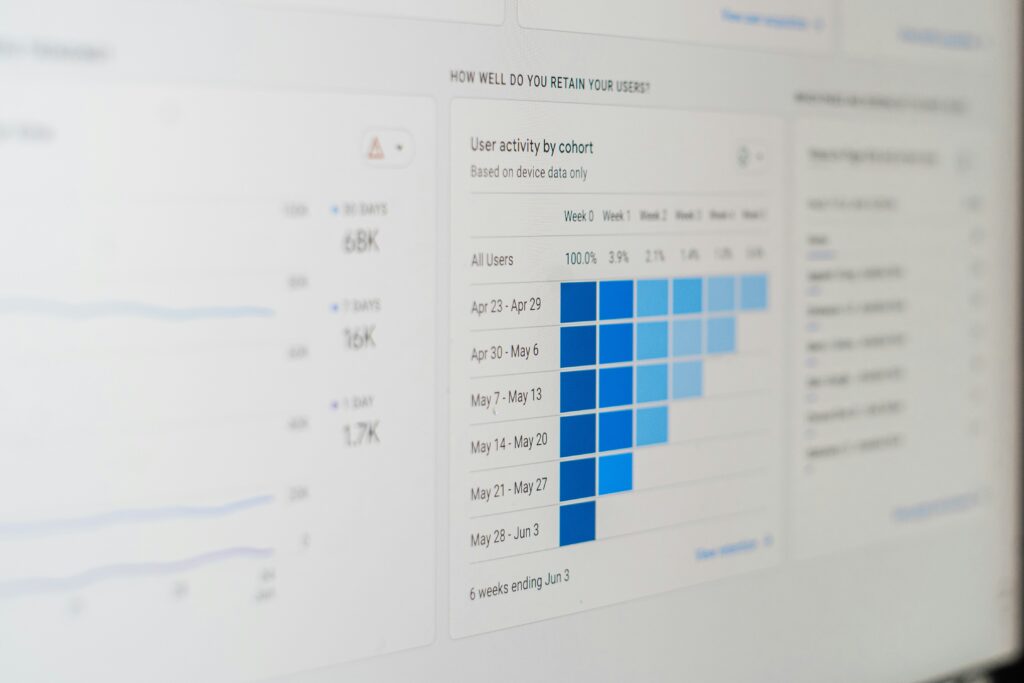
Revenue Per Visitor (RPV)
RPV, or Revenue Per Visitor, is one of the clearest measures of how effectively your store is turning clicks into cash. The formula’s simple: Total Revenue ÷ Number of Visitors. No fluff. No inflated follower counts or vanity stats. Just cold, usable data.
What makes RPV worth tracking is how it cuts past traffic hype. You can have thousands of visitors and still bleed money if they’re not buying. RPV shows the value of each visitor and points toward where your real leverage is.
If you’re running ads or optimizing a landing page, RPV puts everything into perspective. It shows whether your paid traffic has teeth or if you’re just pouring cash into empty clicks. High RPV? Pour it on. Low RPV? Time to tweak.
To push RPV higher, look at strategic upsells, bundles, and smart product placement. Maybe it’s adding a “frequently bought together” block or reworking the layout so bestsellers get top billing. Point is: you’re not necessarily chasing more traffic, just making more out of the traffic you already have.
Customer Acquisition Cost (CAC)
Let’s not sugarcoat it winning one paying customer in 2026 is more expensive than it used to be. Between rising ad costs and increased competition, CAC (Customer Acquisition Cost) has become a make or break metric for online stores.
Here’s what you’re looking at:
Paid search: In high intent categories, expect CACs between $40 $85. High performing brands are dialing in on long tail keywords and feeding performance data back into their ad engines weekly.
Social ads: CAC ranges from $55 $120, skewing higher for impulse purchases or visual first products. Brands at the top are leaning harder into creative testing not just audience targeting.
Influencer collabs: CAC can drop as low as $25 for micro creators with tight niche audiences. But poor partner alignment? That’ll cost you more than just dollars think diluted trust.
For brands under 5 years old, a healthy CAC generally lands around 25 30% of your average order value. Go higher than that, and you’re likely chewing through cash faster than you can earn loyalty.
When CAC spikes, it’s a red flag not a death sentence. Revisit your funnel from the first click to post purchase. Are your ads misaligned with your landing page? Is your offer stale? And don’t rule out tightening operational costs speaking of which, here’s a useful read on reducing ecommerce overhead.
Stay sharp. CAC won’t fix itself.
Customer Lifetime Value (LTV)

LTV = Average Purchase × Frequency × Customer Lifespan. That’s it. Simple math, big insight. LTV gives you clarity on not just how much a customer is worth today but what they’re worth over time. In a landscape where ad costs keep climbing and acquisition isn’t getting any easier, knowing your LTV helps you stop guessing and start planning. If there’s one metric that guides sustainable growth, this is it.
Boosting LTV isn’t about squeezing more out of each customer. It’s about giving them reasons to stick around. You do that with solid email flows, loyalty perks, and bundling options that make more sense than just offering a 10% discount. Make it easy for people to buy again and want to. It pays.
Lastly, LTV helps you figure out how aggressive you can be with CAC. If you know a customer is worth $300 over three years, spending $50 or even $100 to acquire one may be a no brainer. The point is: you can’t optimize what you don’t measure. And you definitely can’t scale what you don’t understand.
Conversion Rate (CR)
Conversion Rate (CR) remains one of the most critical performance indicators for any eCommerce store. It tells you how many visitors take your desired action like making a purchase out of the total number of visitors. But in 2026, just achieving a decent CR isn’t enough. You need to understand where improvements can be made and what obstacles might be in your way.
What’s Considered a “Good” Conversion Rate in 2026?
It depends heavily on your industry, product type, and traffic source, but here are some general benchmarks:
2.1% 3.5% average range for most consumer goods
3.6% 4.8% considered strong for niche or high trust products
Above 5% excellent performance, typically driven by high quality traffic and optimized UX
If you’re below 2%, it’s time to audit your funnel, user experience, and product market fit.
Break Down Conversion Rate by Source
To really learn what’s working (and what’s not), break your CR down by specific variables:
Traffic source: Paid search may convert differently than organic or influencer traffic.
Landing page performance: Not all pages close the sale analyze top performers vs. underachievers.
Device type: Mobile needs to convert just as well as desktop in 2026.
A/B Testing Tactics That Still Work
Split testing is far from dead; it just needs to be smarter in how it’s run.
Test headline clarity and CTA placement
Experiment with social proof (reviews, testimonials) near CTAs
Try simplifying your checkout process a long form can kill conversions
Common CR Killers to Avoid
Before tweaking funnels or running paid ads, rule out these deal breakers that often wreck conversions:
Slow page load times, especially on mobile
Vague or missing value propositions, which confuse the buyer
Clunky mobile user experience, including hard to click buttons and unoptimized layouts
Pro tip: Run regular CRO audits with tools like Hotjar and Google Optimize.
Tracking CR isn’t about perfection it’s about constant iteration. The more you test, measure, and tweak, the easier it becomes to move from average to high performing.
Inventory Turnover Rate
Inventory Turnover Rate = Cost of Goods Sold (COGS) ÷ Average Inventory. Simple math, but a powerful pulse check on your store’s financial health. High turnover? That’s inventory moving fast meaning you’re selling efficiently and keeping storage costs lean. Low turnover? That’s money tied up in unsold stock, plus rising risk of markdowns, spoilage, or dead weight on your shelves.
This metric is cash flow’s best friend. When you’re turning inventory regularly, you’re freeing up capital to reinvest whether it’s in product development, marketing, or simply keeping the lights on. That makes turnover crucial for forecasting and profitability. When you know how fast items sell, you can order with more precision, prep for seasonality, and avoid costly overstock situations.
Pro tips: stay close to your sales data during peak seasons, invest in forecasting tools that flag slow movers early, and coordinate with suppliers to pivot quickly if trends shift. It’s not just about selling more it’s about selling smarter.
Stay Data Driven, Not Just Data Flooded
It’s 2026, and data is no longer a nice to have. It’s embedded in every platform, every app, every click. But here’s the catch having access to data doesn’t make you data driven. It just makes you overwhelmed unless you know what to track and how to act on it.
That’s where smart tools cut through the noise. Platforms like Triple Whale, Peel, and Daasity simplify tracking the metrics that matter. They integrate with your stack, automate reporting, and surface trends before they become problems. You don’t need 50 dashboards you need five focused numbers.
Because what you don’t measure, you can’t manage. And what you don’t manage will quietly erode your margins. Track these five: RPV, CAC, LTV, CR, and Inventory Turnover. Nail them, and you strip the excess off your operation. You move faster, spend smarter, and stay profitable without flying blind.
Data isn’t the goal. Clarity is. That’s what keeps you lean and adaptable while others drown in spreadsheets.